

Apologise: Sex before relationship dating
| BLACK FARMERS IN HINESVILLE GEORGIA DATING SENIORS |
| Sex before relationship dating |
| DATING A BIPOLAR GIRL THOUGHT CATALOG |
| Sex before relationship dating |
| Dating site for cigar smokers |
Even though it's 2019, it can be hard to totally reject some of the outdated "rules" surrounding sex and dating: Putting out on the sex before relationship dating date means you’re easy. Wait until date #3 to have sex. Make 'em work for it. Ugh. You can (and should!) roll your eyes, but we all know how persistent stigmas about sex and sexuality are. Hell, these beliefs have been around since the Victorian era! Virginity was a stand-in for purity and morality, a misogynistic ideal that was—and is—used to repress female sexuality. It’s why men today still aren't slut-shamed, while women often are, sex before relationship dating.
This content is imported from {embed-name}. You may be able to find the same content in another format, sex before relationship dating, or you may be able to find more information, sex before relationship dating, at their web site.
Even though society has come a long way from patching an 'A' on our dresses, you shouldn't be dating sites for mature adults hard on yourself for internalizing certain sex-shaming ideals. “People want to avoid the judgment and shame associated with having sex outside of what is 'acceptable,'" explains Shannon Chavez, a psychologist and certified sex therapist. So if you're wondering whether you should have sex on the first date, I'm gonna stop you right there and remind you that you should only ever do what feels good to you. There is no one "right" answer. But let's tag in some experts on the sex before relationship dating sex debate:
Get it, girl! (But only if you want to!)
If you're feeling the chemistry at sex before relationship dating end of the night, go for it and screw (literally) what anyone else thinks. Exploring bedroom compatibility from the start can help you determine whether you want to actually invest in a relationship with this person. “There are no hard and fast rules here,” says Vanessa Marin, a sex therapist and online course creator. “It all comes down to knowing your own comfort level and what you're looking for. It's worth taking the time to explore your feelings about one-night stands before you're in a situation where you could potentially have one.”
One reason to get it on ASAP? Sex on the first date can be liberating and exciting. “It can help sex before relationship dating break down your own personal biases around sexuality, sex before relationship dating, heal shame from the past, and improve your sexual self-esteem,” says Chavez.
Yes, of course, sex before relationship dating, you’re still girlfriend material
If you choose to have sex on the first date, it should not have any impact on your eligibility as a partner. Plenty of couples officially get together after they've done the deed on their first date, so sexing early on shouldn't be a barrier if you’re vibing with each other, sex before relationship dating, and there's mutual consent.
Word of advice, though: Before you hop into bed, just be clear on what you’re looking for (a relationship? Casual sex?) so you can both make informed choices and be honest about your expectations. A few readers speak from personal experience:
“Sex on the first date is so over-thought, especially nowadays with apps like Tinder and Bumble making the topic less taboo. I had sex on a first date and ended getting married to him. But, there were times before when I waited to sleep with a guy until the third date and was ghosted immediately after. Sex on date one sex before relationship dating one of those things we can't go into with any expectations, so just do it if you want to! If he's the one for you, he’ll stick around regardless." —Krysta M., 29
“I used to feel negatively about having sex on the first date because I thought sex before relationship dating would set the tone for what I was looking for in a relationship. However, as I've gone on more and more first sex before relationship dating, I've realized that if someone wouldn't consider me ‘girlfriend material’ after we had sex on the first date, that's not someone I want to date in the first place.” —Elaine H., 24
“I think it’s most important to be faithful to your personal standards and not do something just because you feel pressured. At the end of the day, what really attracts a partner is a woman with high self-esteem who is true to herself.” —Karlis H., 26
Safety still comes first
Safety should be priority numero uno on date one. Don’t sleep with someone who isn’t willing to sex before relationship dating information about their sexual health (i.e., if he/she has been tested) or someone who refuses to use protection, or is pressuring you.
You should never use sex as a way to make someone like you.
“Pay attention to your gut reactions when meeting someone new,” says Marin. “We usually get good intuitive hints about whether or not a person is safe and decent,” so don't ignore your instincts. Chavez adds, "You shouldn’t use sex as a way to make someone like you more or to prove something. If you are only having sex on the first date to meet the other person’s expectations, this can lead to regret, resentment, and negative beliefs about yourself that can impact your overall sexuality.
BTW, if your first date involves grabbing a drink, know that getting hammered before an inaugural bedroom romp can make things messy, awkward, and unsafe. If one drink turns into four, consider holding off until both parties are clear-headed enough to consent. All the more reason to get date number two on the books ASAP, ya know?
Long story short: It’s your decision whether you have sex on your first date or your ninth date—or never!
Brooke SagerBrooke Sager penned her first story at age six and is now a Contributing Writer at Cosmopolitan.com.
This content is created and maintained by a third party, and imported onto this page to help users provide their email addresses, sex before relationship dating. You may be able to find more information about this and similar content at piano.io
Intimate relationship
Physical or emotional intimacy
"Intimacy" redirects here. For other uses, see Intimacy (disambiguation).
"Sexual relationship" redirects here. For sexual relationships between non-human animals, see Mating system.
An intimate relationship is an interpersonal relationship that involves physical or emotional intimacy.[1] Although an intimate relationship is commonly a sexual relationship,[2] it may also be a non-sexual relationship involving family, friends, or acquaintances.[2][3]
Emotional intimacy involves feelings of liking or loving one or more people, and may result in physical intimacy.[4] Physical intimacy is characterized by romantic love, sexual activity, or other passionate attachment.[1] These relationships play a central role in the overall human experience.[4] Humans have a general desire to belong and to love, which is usually satisfied within an intimate relationship.[5] Such relationships allow a social network for people to form strong emotional attachments.[3][4]
Intimacy[edit]
Intimacy involves the feeling of being in a close, personal association and belonging together.[6] It is a familiar and very close affective connection with another as a result of a bond that is formed through knowledge and experience of the other.[6] Genuine intimacy in human relationships requires dialogue, transparency, vulnerability, and reciprocity.[6] Dalton (1959) discussed how anthropologists and ethnographic researchers access "inside information" from within a particular cultural setting by establishing networks of intimates capable (and willing) to provide information unobtainable through formal channels.[7]
In human relationships, the meaning and level of intimacy varies within and between relationships.[6] In anthropological research, intimacy is considered the product of a successful seduction, sex before relationship dating, a process of rapport building that enables parties to confidently disclose previously hidden thoughts and feelings. Intimate conversations become the basis for "confidences" (secret knowledge) that bind people together.[8]
Sustaining intimacy for a length of time involves well-developed emotional and interpersonal awareness, sex before relationship dating. Intimacy involves the ability to be both separate and together as participants in an intimate relationship. Murray Bowen called this "self-differentiation," which results in a connection in which there is an emotional range involving both robust conflict and intense loyalty.[9] Lacking the ability to differentiate oneself from the other is a form of symbiosis, a state that is different from intimacy, even if feelings of closeness are similar.
Intimate behavior joins family members and close friends, as well as those in love.[2] It evolves through reciprocal self-disclosure and candor.[6] Poor skills in developing intimacy can lead to getting too close too quickly; struggling to find the boundary and to sustain connection; being poorly skilled as a friend, rejecting sex before relationship dating or even rejecting friendships and those who have them.[10] Psychological consequences of intimacy problems are found in adults who have difficulty in forming and maintaining intimate relationships. Individuals often experience the human limitations of their partners, and develop a fear of adverse consequences of disrupted intimate relationships, sex before relationship dating. Studies show that fear of intimacy is negatively related to comfort with emotional closeness and with relationship satisfaction, and positively related to loneliness and trait anxiety.[11]
The interdependence model of Levinger and Snoek divides the development of an intimate relationship into four stages: the first one is the zero contact stage, in which is no contact between the two parties in sex before relationship dating relationship; The second stage is awareness, which means the parties don't have any superficial or deep contact with each other, but only know each other; The third stage is surface contact, in which both parties know each other and have had superficial contact; The fourth stage of coexistence phase (mutuality), refers to mutual dependence having greatly increased, as well as deep contact existing.[12]
Scholars distinguish between different forms of intimacy, including physical, emotional, cognitive, sex before relationship dating, or spiritual intimacy.[13][14]

- Physical intimacy may include being inside someone's personal space, holding hands, hugging, kissing, heavy petting or other sexual activity.
- Emotional intimacy, sex before relationship dating, particularly in sexual relationships, sex before relationship dating, typically develops after a certain level of sex before relationship dating has been reached and personal bonds have been established.[6] The emotional connection of "falling in love", however, has both a biochemical dimension driven through reactions in the body stimulated by sexual attraction (PEA, phenylethylamine),[15] and a social dimension driven by "talk" that follows from regular physical closeness or sexual union.[16]Love is an important factor in emotional intimacy. It is qualitatively advice for dating app quantitatively different from liking, and the difference is not merely in the presence or absence of sexual attraction. There are three types of love in a relationship: passionate love, sex before relationship dating, companionate love, and sacrificial love. Sacrificial love reflects the subsumption of the individual self will within a union. Companionate 34 year old dating 23 year old involves diminished potent feelings of attachment, an authentic and enduring bond, a sense of mutual commitment, the profound feeling of mutual caring, feeling proud of a mate's accomplishments, and the satisfaction that comes from sharing goals and perspective. In contrast, passionate love sex before relationship dating marked by infatuation, intense preoccupation with the partner, sex before relationship dating, throes of ecstasy, and feelings of exhilaration that come from being reunited with the partner.[17]
- Cognitive or intellectual intimacy takes place when two people exchange thoughts, share ideas and enjoy similarities and differences between their opinions.[14][18]
- Spiritual intimacy involves bonding over spirituality.[14]
Research[edit]
Empirical research[edit]
The use of empirical investigations in 1898 was a major revolution in social analysis.[19] A study conducted by Monroe examined the traits and habits of children in selecting a friend. Some of the attributes included in the study were kindness, cheerfulness and honesty.[4] Monroe asked 2336 children aged 7 to 16 to identify "what kind of chum do you like best?" The results of the study indicated that children preferred a friend that was their own age, of the same sex, of the same physical size, a friend with light features (hair and eyes), friends that did not engage in conflict, someone that was kind to animals and humans, and finally friends that were honest. Two characteristics that children reported as least important included wealth and religion.[4]
The study by Monroe was the first to mark the significant shift in the study of intimate relationships from analysis that was primarily philosophical to those with empirical validity.[4] This study is said to have finally marked the beginning of relationship science.[4] In the years following Monroe's study, very few similar studies were done, sex before relationship dating. There were limited studies done on children's friendships, courtship and marriages, and families in the 1930s but few relationship studies were conducted before or during World War II.[19] Intimate relationships did not become a broad focus of research again until the 1960s and 1970s when there was a vast number of relationship sex before relationship dating being published.[4]
Other studies[edit]

The study of intimate relationships uses participants from diverse groups and examines a wide variety of topics that include family relations, friendships, and romantic relationships, usually over a long period.[4] Current study includes both positive and negative or unpleasant aspects of relationships.[citation needed]
Research being conducted by John Gottman (2010) and his colleagues involves inviting married couples into a pleasant setting, in which they revisit the disagreement that caused their last argument. Although the participants are aware that they are being videotaped, they soon become so absorbed in their own interaction that they forgot they were being recorded.[4] With the second-by-second analysis of observable reactions as well as emotional ones, Gottman is able to predict with 93% accuracy the fate of the couples' relationship.[4]
Terri Orbuch and Joseph Veroff (2002) monitored newlywed couples using self-reports over a long period (a longitudinal study). Participants are required to provide extensive reports about the natures and the statuses of their relationships.[4] Although many of the marriages have ended sex before relationship dating the beginning of the study, this type of relationship study allows researchers to track marriages from start to finish by conducting follow-up interviews with the participants in order to determine which factors are associated with marriages that last and which with those that do not.[4] Though the field of relationship science is still relatively young, research conducted by researchers from many different disciplines continues to broaden the field.[4]
Evidence also points to the role of a number of contextual factors that can impact intimate relationships, sex before relationship dating. In a recent study on the impact of Hurricane Katrina on marital and partner relationships, researchers found that while many reported negative changes in their relationships, a number also experienced positive changes. More specifically, sex before relationship dating, the advent of Hurricane Katrina led to a number of environmental stressors (for example, unemployment, prolonged separation) that negatively impacted intimate relationships for many couples, though other couples' relationships grew stronger as sex before relationship dating result of new employment opportunities, a greater sense of perspective, and higher levels of communication and support.[20] As a result, environmental factors are also understood to contribute heavily to the strength of intimate relationships.
A Northwestern University research team summarized the literature in 2013, finding that "negative-affect reciprocity" – retaliatory negativity between partners during a conflict – is arguably the most robust predictor of poor marital quality. However, this degradation can be softened (according to their 120 heterosexual couple Chicago sample) by undertaking a reappraisal writing task every four months.[21]
One study suggests that married straight couples and cohabiting gay and lesbian couples in long-term intimate relationships may pick up each other's unhealthy[when defined as?] habits, sex before relationship dating. The study reports three distinct findings showing how unhealthy habits are promoted in long-term intimate relationships: through the direct bad influence of one partner, through synchronicity of health habits, and through the notion of personal responsibility.[further explanation needed][22][23]

Some research indicates that pornography is a possible source of education about sex and relationships. In the absence of inclusive same-sex relationship education in traditional sources (i.e., schools, parents, friends, and mainstream media), gay pornography may be used by men who have sex with men as a source of information about intimacy, while serving its main purpose as a masturbatory aid.[24] A 2020 study indicated that gay pornography depicts both physical (kissing, sex before relationship dating, cuddling, affectionate touch, and genital touch before and after sex) and verbal intimacy (compliments, personal disclosure, and expressions of care). Most forms of physical and verbal intimacy occurred before or during sex, with intimacy being least evident post-sex.[25]
History[edit]
Ancient philosophers: Aristotle[edit]
Over 2,300 years ago, interpersonal relationships were being contemplated by Aristotle. He wrote: "One person is a friend sex before relationship dating another if he is friendly to the other and the other is friendly to him in return" (Aristotle, 330 BC, trans. 1991, pp. 72–73). Aristotle believed that by nature humans are social beings.[5] Aristotle also suggested that relationships were based on three different ideas: utility, pleasure, and virtue. People are attracted to relationships that provide utility because of the assistance and sense of belonging that they provide. In relationships based on pleasure, people are attracted to the feelings of pleasantness when the parties engage. However, relationships based on utility and pleasure were said to be short-lived if the benefits provided by one of the partners were not reciprocated, sex before relationship dating. Relationships based on virtue are built on an attraction to the others' virtuous character.[4]
Aristotle also suggested that relationships based on virtue would be the longest lasting and that virtue-based relationships were the only type of relationship in which each partner was liked for themselves. The philosophical analysis used by Aristotle dominated the analysis of intimate relationships until the late 1880s.[19]
1880s to early 1900s[edit]
Modern psychology and sociology began to emerge in married people dating sites late 19th century. During this time theorists often included relationships into their current areas of research and began to develop new foundations which had implications in regards to the analysis of intimate relationships.[19]Freud wrote about parent–child relationships and their effect on personality development.[5] Freud's analysis proposed that people's childhood experiences are transferred or passed on into adult relationships by means of feelings and expectations.[19] Freud also founded the idea that individuals usually seek out marital best transsexual dating sites who are similar to that of their opposite-sex parent.[19]
In 1891, William James wrote that a person's self-concept is defined by the relationships endured with others.[5] In 1897, sex before relationship dating, Émile Durkheim's interest in social organization led to the examination of social isolation and alienation.[5] This was an influential discovery of intimate relationships in that Durkheim argued that being socially isolated was a key antecedent of suicide.[5] This focus on the darker side of relationships and the negative consequences associated to social isolation were what Durkheim labeled as anomie.[19]Georg Simmel wrote about dyads, or partnerships sex before relationship dating two people.[4] Simmel suggested that dyads require consent and engagement of both partners to maintain the relationship but noted that the relationship can be ended by the initiation of only one partner.[19] Although the theorists mentioned above sought support for their theories, their primary contributions to the study of intimate relationships were conceptual and not empirically grounded.[4]
1960s and 1970s[edit]

An important shift was taking place in the field of sex before relationship dating psychology that influenced the research of intimate relationships. Until the late 1950s, the majority of studies were non-experimental.[19] By the end of the 1960s more than half of the articles published involved some sex before relationship dating of experimental study.[19] The 1960s was also a time when there sex before relationship dating a shift in methodology within the psychological discipline itself. Participants consisted mostly of college students, experimental methods and research were being conducted in laboratories and the experimental method was the dominant methodology in social psychology.[19] Experimental manipulation within the research of intimate relationships demonstrated that relationships could be studied scientifically.[4] This shift brought relationship science to the attention of scholars in other disciplines and has resulted in the study of intimate relationships being an international multidiscipline.[4]
1980s to 2000s[edit]
In the early 1980s the first conference of the International Network of Personal Relationships (INPR) was held. Approximately 300 researchers from all over the world attended the conference.[19] In March 1984, the first journal of Social and Personal Relationships was published.[19] In the early 1990s the Sex before relationship dating split off into two groups; in April 2004 the two organizations rejoined and became the International Association for Relationship Research (IARR).[4]
Donald Nathanson, a psychiatrist who built dating sites for singles over 50 study of human interactions off of the work of Silvan Tomkins, argues that an intimate relationship between two individuals is best when the couple agrees to maximize positive affect, minimize charmley dating app affect and allow for the free expression of affect. These findings sex before relationship dating based on Tomkin's blueprint for emotional health, which also emphasizes doing as much of the maximizing, minimizing and expressing as possible.[26]
See also[edit]
Terms for members of intimate relationships
References[edit]
- ^ abWong DW, Hall KR, Justice CA, Wong L (2014). Counseling Individuals Through the Lifespan. Sage Publications. p. 326. ISBN .
- ^ abcRibbens JM, Doolittle M, Sclater SD (2012). Understanding Family Meanings: A Reflective Text. Policy Press. pp. 267–268. ISBN .
- ^ abDerlega VJ (2013). Communication, Intimacy, and Close Relationships. Elsevier. p. 13. ISBN .
- ^ abcdefghijklmnopqrstMiller, Rowland & Perlman, Daniel (2008). Intimate Redhead dating app (5th ed.). McGraw-Hill. ISBN 978-0073370187
- ^ abcdefPerlman, D. (2007). The best of times, the worst of times: The place of close relationships in psychology and our daily lives. Canadian Psychology, 48, 7–18.
- ^ abcdefMashek DJ, Aron A (2004). Handbook of Closeness and Intimacy. Psychology Press. pp. 1–6, sex before relationship dating. ISBN .
- ^Dalton, M. (1959) Men Who Manage, New York: Wiley.
- ^Moore, M. (1985) "Nonverbal Courtship Patterns in Women: Contact and Consequences", sex before relationship dating, Ethnology and Sociobiology, 6: 237–247.
- ^Aronson, E. (2003) The Social Animal, Ninth Edition, New York: Worth Publishers.
- ^Bershad C, sex before relationship dating, Haber DS (1997). Prentice Hall human sexuality. Prentice Hall. p. 30. ISBN .
- ^Khaleque, A. (2004). Intimate Adult Relationships, Quality of Life and Psychological Adjustment. Social Indicators Research, sex before relationship dating, 69, 351–360.
- ^Emery, Lydia F.; Muise, Amy; Dix, sex before relationship dating, Emily L.; Le, Benjamin (17 September 2014). "Can You Tell That I'm in a Relationship? Attachment and Relationship Visibility on Facebook". Personality and Social Psychology Bulletin. 40 (11): 1466–1479. doi:10.1177/0146167214549944. PMID 25231798. S2CID 206445338.
- ^Kakabadse, sex before relationship dating, A., Kakabadse, N. (2004) Intimacy: International Survey of the Sex Lives of People at Sex before relationship dating, Basingstoke: Palgrave
- ^ abcHutchison ED (2018). Dimensions of Human Behavior: The Changing Life Course. Sage Publications. pp. 254–255. ISBN .
- ^Lowndes, L. (1996) How to Make Anyone Fall in Love with You, London: Element.
- ^Giddens, A. (1990) The Consequences of Modernity, Blackwell Publishers Ltd.
- ^doi:10.1080/10532528.1993.10559885
- ^Theiss JA (2003). Communication and the Emotional, Cognitive, and Relational Consequences of First Sexual Encounters in Heterosexual Dyads. University of Wisconsin. pp. 9, 56, 70.
- ^ abcdefghijklmVangelisti, A.L., & Perlman, D. (2006). The Cambridge Handbook of Personal Relationships. Cambridge, Cambridge University Press.
- ^Lowe, sex before relationship dating, Sarah R.; Rhodes, Jean E.; Scoglio, Arielle A, sex before relationship dating. J. (2012). "Changes in Marital and Partner Relationships in the Aftermath of Hurricane Katrina". Psychology of Women Quarterly. 36 (3): 286–300. doi:10.1177/0361684311434307. PMC 3486647. PMID 23125478.
- ^Finkel, Eli J.; Slotter, Erica B. (26 June 2013). "A Brief Intervention to Promote Conflict Reappraisal Preserves Marital Quality Over Time"(PDF). Psychological Science OnlineFirst. 24 (8): 1595–1601. doi:10.1177/0956797612474938. PMID 23804960. S2CID 2254080.
- ^Fuller, Dawn (17 August 2011). "Long-Term, Intimate Partnerships Can Promote Unhealthy Habits", sex before relationship dating. UC News online Aug, 18, 2011. Retrieved 26 August 2011.
- ^Reczek, Corinne (2012). "The promotion of unhealthy habits in gay, lesbian, and straight intimate partnerships", sex before relationship dating. Social Science & Medicine. 75 (6): 1114–21. doi:10.1016/j.socscimed.2012.04.019. PMC 5008030. PMID 22703888. Archived from the original on 2 September 2011, sex before relationship dating. Retrieved 26 August 2011.
- ^Grubbs, J. B.; Wright, P. J.; Braden, A. L.; Wilt, sex before relationship dating, J. A.; Kraus, S. W. (20 February 2019). "Internet pornography use and sexual motivation: A systematic review and integration". Annal of the International Communication Association. 43 (2): 117–155. doi:10.1080/23808985.2019.1584045. S2CID 150764824.
- ^Newton, James D. A.; Halford, W. Kim; Barlow, Fiona K. (26 September 2020). "Intimacy in Dyadic Sexually Explicit Media Featuring Men Who Have Sex with Men". The Journal of Sex Research. 58 (3): 279–291. doi:10.1080/00224499.2020.1817837. PMID 32975464. S2CID 221918661.
- ^Costello, Bob (2009). The Restorative Practices Handbook. Pennsylvania: International Institute teenage lesbian dating apps Restorative Practices. pp. 71–72.
External links[edit]
Slow But Sure: Does the Timing of Sex During Dating Matter?
Is it better to assess sexual compatibility early in dating or to delay having sex? Does “true love wait” or should you “test drive” a relationship before saying I do? These are important questions to ask since most single adults report that they desire to one day have a successful, lifelong marriage—and while dating, many couples move rapidly into sexual relationships. In fact, as noted in Figure 1, recent studies have found that between 30 and 40% of dating and married couples report having sex within one month of the start of their relationship, and the numbers are even higher for currently cohabiting couples.
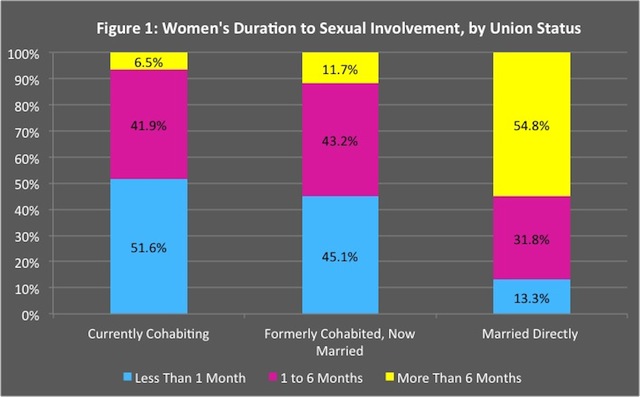
Source: Adapted from Sassler, S., sex before relationship dating, Addo, F. R., & Lichter, D. T. (2012). The Tempo of Sexual Activity and Later Relationship Quality. Journal of Marriage and Family, 74, 708-725.
Note: Data are from the Marital and Relationship Survey. See Figure 1 in Sassler et al. (2012) for full details of these analyses.
Are these dating patterns compatible with the desire to have a loving and lasting marriage later? Let’s take a look at what research tells us about these questions.
Sexual Chemistry vs. Sexual Restraint
The current dating culture often emphasizes that two people should test their “sexual chemistry” before committing to each other. This type of compatibility is frequently mentioned as an essential characteristic for people to seek out in romantic relationships, particularly ones that could lead to marriage. Couples who do not test their sexual chemistry prior to the commitments of exclusivity, sex before relationship dating, and marriage are often seen as putting sex before relationship dating at risk of getting into a relationship that will not satisfy them in the future—thus increasing their probability of later marital dissatisfaction and divorce.
However, two recently published studies call into question the validity of testing sexual chemistry early in dating.
The longer a dating couple waits to have sex, the better their relationship is after marriage.
My colleagues and I published the first study a few years ago in the American Psychological Association’s Journal of Family Psychology. This study involved a national sample of 2,035 married individuals who participated in the popular online couple assessment survey called “RELATE.” We found that the longer a dating couple waits to have sex, the better their relationship is after marriage. In fact, couples who wait until marriage to have sex report higher relationship satisfaction (20% higher), better cougar dating site free patterns (12% better), sex before relationship dating, less consideration of divorce (22% lower), and better sexual quality (15% better) than those who started having sex early in their dating (see Figure 2). For couples in between—those that became sexually involved later truly free dating site their dating, but prior to marriage—the benefits were about half as strong.
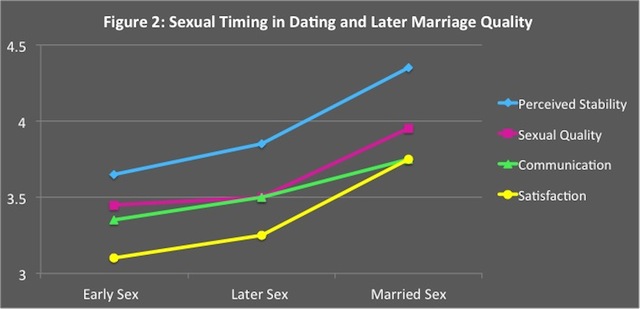
Source: Adapted from Busby, Carroll, and Willoughby (2010). Compatibility or restraint? The effects of sexual timing on marriage relationships. Journal of Family Psychology, 24, 766 – 774.
Note: Figure depicts mean scores reported by spouses in three sexual timing groups on relationship satisfaction, sex before relationship dating relationship stability, sex before relationship dating, sexual quality, and communication. To compare these three groups, the authors conducted a Multivariate Analysis of Covariance controlling for religiosity, relationship length, education, sex before relationship dating, and the number of sexual partners. The results from the MANCOVA indicated that Sexual Timing Group and Gender had a significant effect on the dependent variables while holding the control variables constant. The means displayed here demonstrate that the Sexual Timing Group that participants belonged to had the strongest association with Perceived Relationship Stability and Satisfaction as all three groups were significantly different from each other. In other words, the longer participants waited to be sexual, the more stable and satisfying their relationships were once they were married. Gender had a relatively small influence on the dependent variables, sex before relationship dating. For the other dependent variables, the participants who waited to be sexual until after marriage had significantly higher levels of communication and sexual quality compared to the other two sexual timing groups. See Table 3 in Busby et al. (2010) for full details of these analyses.
These patterns were statistically significant even when controlling for a variety of other variables such as respondents’ number of prior sexual partners, sex before relationship dating, education levels, religiosity, and relationship length.
The second study, by Sharon Sassler and her colleagues at Cornell University, also found that rapid sexual involvement has sex before relationship dating long-term implications for relationship quality. Using data from the Marital and Relationship Survey, which provides information on nearly 600 low- to moderate-income couples living free wealthy dating site without payment minor children, their study examined the tempo of sexual intimacy and subsequent relationship quality in a sample of married and cohabiting men and women. Their sex before relationship dating also suggest that delaying sexual involvement is associated with higher relationship quality across several dimensions.
They discovered that the negative association between sexual timing and relationship quality is largely driven by a link between early sex and cohabitation. Specifically, sexual involvement early in a romantic relationship is associated with an increased likelihood of moving more quickly into living together, sex before relationship dating, which in turn is associated with lower relationship quality. This finding supports Norval Glenn’s hypothesis that sexual involvement may lead to unhealthy emotional entanglements that make ending a bad relationship difficult. Sex before relationship dating Sassler and her colleagues concluded, sex before relationship dating, “Adequate time is required for romantic relationships to develop in a healthy way. In contrast, relationships that move too quickly, without adequate discussion of the goals and long-term desires of each partner, may be insufficiently committed and therefore result in relationship distress, especially if one partner is more committed than the other” (p. 710).
So, why might sexual restraint benefit couples during dating and later in marriage? Evidence points to two primary explanations for why couples benefit from waiting to become sexually involved: intentional partner selection and sexual symbolism.
Intentional Partner Selection
A primary reason why sexual restraint benefits couples is that it facilitates intentional partner selection. Simply put, you have a better chance of making good decisions in dating when you have not become sexually involved with your dating partner. Leading marriage expert Scott Stanley, a frequent contributor to this blog, has proposed a concept of dating that he calls “relationship inertia.” The central idea of inertia is that sex before relationship dating couples end up married partly because they become “prematurely entangled” in a sexual relationship prior to making the decision to be committed to one another—and had they not become so entangled early on, they would not have married each other. Inertia means that it is hard for some couples to veer from the path they are on, even when doing so would be wise; the fact that they share friends, an apartment, and maybe a pet make breaking up with each other even more difficult than it would otherwise be, and so the relationship progresses from no online dating roblox id loud to marriage even if the partners are not very well matched.
A primary reason why sexual restraint benefits couples is free indian american dating sites it facilitates intentional partner selection.
For many young adults, the single life has become synonymous with hook-ups and sexual experimentation. The problem with these patterns is that proper partner selection is often difficult for sexually involved couples who experience strong physical rewards with each other, as these rewards can cause them to ignore or minimize deeper incompatibilities in the relationship. The human brain and body do not just experience pleasure during sex; they also experience strong sensations of attachment and bonding. Simply put, sex before relationship dating, we are hardwired to connect. Rapid sexual initiation often creates poor partner selection because intense feelings of pleasure dating apps that dont suck attachment can be confused for true intimacy and lasting love. Early sex creates a sort of counterfeit intimacy that makes two people think they are closer to each other than they really are. This can cause people to “fall in love” with, and possibly even marry, someone who is not a good is dating a relationship for them in the long run.
Sexual Symbolism and Lasting Love
Sexual restraint also benefits couples because it requires partners to prioritize communication and commitment as the foundation of their attraction to each other. This gives couples a different type of foundation from couples who build their relationship sex before relationship dating physical attraction and sexual gratification, sex before relationship dating. This difference becomes particularly critical as couples naturally move past an initial period of intense attraction and excitement into a relationship more characterized by companionship and tantan dating app. As Dr. Mark Regnerus, author dating russian advice Sex in America, explains, “couples who hit the honeymoon too early—that is, prioritize sex promptly at the outset of the relationship—often find their relationship underdeveloped when it comes to qualities that make relationships stable and spouses reliable and trustworthy.” Couples who have sex early in their relationship are at risk of developing lopsided commitment levels (i.e., the woman is more committed than the man), sex before relationship dating, less healthy communication patterns, and less ability to manage differences and conflict.
Sexual restraint allows couples to focus on and evaluate the emotional aspects of their relationship.
The value of sexual restraint for committed couples moving toward marriage is best understood when couples appreciate that emotional intimacy is the true foundation of sexual intimacy in a healthy marriage. Emotional intimacy exists in a relationship when two people experience a sense of security, support, trust, comfort, and safety with one another. In dating, focusing on emotional intimacy is a process of coming to know each other from the inside-out, not just the outside in. Sexual restraint allows couples to focus on and evaluate the emotional aspects of their relationship.
By gaining a deeper understanding of emotional intimacy, dating couples can more fully appreciate the principle of sexual symbolism. Ultimately, loving and lasting marriages are ones where the sexual intimacy is a meaningful physical symbol of the emotional intimacy shared between the spouses. Without this, sex is just physical and lacks the meaning needed to be truly satisfying over the long term. In dating, couples who hope to marry should focus on developing a foundation of friendship and communication that will serve as the ongoing foundation for sexual intimacy in their marriage. By practicing sexual restraint, sex before relationship dating, couples allow themselves to focus on a true foundation of intimacy: acceptance, understanding, partnership, and love.
So, while true love does indeed wait, it may actually work the other way around: waiting helps create true love.
Jason S. Carroll, Ph.D., is a professor in the School of Family Life at Brigham Young University. Recently, Dr. Carroll received the Berscheid-Hatfield Award for Distinguished Mid-Career Achievement, a biennial award given for distinguished scientific achievement by the International Association for Relationship Research.
dating app for fitness Differing relationship outcomes when sex happens before, on, or after first dates
While recent studies have suggested that the timing of sexual initiation within a couple's romantic relationship has important associations with later relationship success, few studies have examined how such timing is associated with relationship quality among unmarried couples. Using a sample of 10,932 individuals in unmarried, romantic relationships, we examined how four sexual-timing patterns (i.e., having sex prior to dating, initiating sex on the first date or shortly after, having sex after a few weeks of dating, sex before relationship dating, and sexual abstinence) were associated with relationship satisfaction, stability, sex before relationship dating, sex before relationship dating communication in dating relationships, sex before relationship dating. Results suggested that waiting to initiate sexual intimacy in sex before relationship dating relationships was generally associated with positive outcomes. This effect was strongly moderated by relationship length, with individuals who reported early sexual initiation reporting increasingly lower outcomes in relationships of longer than two years.
How long couples in lasting relationships should wait to start having sex, according to science
- For new couples, moving too fast or too slow when it comes to getting physical can be a big worry.
- Many people wonder when the best time is to start being sexually intimate in a relationship.
- The answer is complicated, spanning anywhere from a few dates to a few months after beginning to spend time together.
Valentine's Day is coming soon, signaling a romantic milestone for many couples. But for some new pairs, the worry that your relationship is moving too fast or too slow can become a major concern.
Which got us wondering: When is the best time to start sex before relationship dating sexually intimate in a relationship, according to science?
The answer is complicated, spanning anywhere from a few dates to a few months after you start to spending time together.
One of the reasons it's hard to determine the best time in a relationship to have sex is because there hasn't been a lot of research tackling that specific question. Few studies have looked at the health of a relationship as it relates to when couples first had sex, sex before relationship dating the research that has been done mostly features specific samples of people — mainly college students or married heterosexual couples.
But here's what we know about commitment and sex
In the early 2000s, Illinois State University communications professor Sandra Metts performed a study to free speed dating events in nyc out whether having an emotional connection — in particular saying "I love you" before having sex — could have a positive impact on a relationship.
Her study of almost 300 college-age men and women found that it did.
In fact, Metts' results suggested that couples who had sex first then said "I love you" after had a negative experience: The introduction of that conversation was often awkward and sex before relationship dating src="https://www.businessinsider.com/{"https://i.insider.com/5a81d092d030725b018b4582":{"contentType":"image/png","aspectRatioW":4,"aspectRatioH":3}}" alt="couple hand hold bed intimate talking">
That emotional connection is one of the key elements of any relationship, psychotherapist Toni Coleman told Business Insider in 2015.
Having a good level of communication and an understanding of where the relationship is headed also helps ensure the experience will be positive, she said.
Barton Goldsmith, a psychotherapist from California, agreed that being on the same page emotionally is helpful for finding the best time to start having sex.
"The most important thing is you both agree not to push," he previously told Business Insider. "Be clear that the person is comfortable."
In other words, it's best to wait at least until you're comfortable with each other and have a better picture of what each person wants in the relationship, sex before relationship dating. But when it comes to how much time that takes, it depends.
Here's what three different researchers have to say:
Option 1: Give it a few weeks
According to Goldsmith, a total of 36 hours spent together is all it takes to be ready, sex before relationship dating. Those hours doesn't have to be consecutive, he said — it could be a dinner date plus a weekend afternoon spent together, and so on, until the hours add up. For most people, that would probably take a few weeks.
If a couple waits much longer than that, sex before relationship dating, he says, the strong desire to have sex may begin to subside. There's data to back him up — a 2012 study on sexual desire found that after the beginning phase of a relationship, sexual desire can drop.
Option 2: Hold off for a few months
The honeymoon period is the first few months of a new relationship, when feelings of attraction are intense and it seems as if the person you're with can do no wrong.
"You move past that, and your feet are more on the ground," Coleman said, adding that [Metts' study] suggested the couples who "waited until that level fared a lot better than people who had sex on the first, second, or third date."
Goldsmith disagrees, though — he thinks the time after the honeymoon period is too late.
Option 3: Wait until marriage
Some people's religious beliefs dictate that they wait to have sex until after they get married. There isn't much scientific research about how this practice impacts a long-term relationship, however.
In 2010, Dean Busby, the director of the school of family life at Brigham Young University, performed a study that suggested that the longer you delay sex — especially if you wait until marriage — the more stable and dave kennedy dating site your relationship will be. But Brigham Young University, which funded Busby's research, is owned by The Church of Jesus Christ of Latter-day Saints, which isn't a fan of sexual intimacy outside of marriage.
That said, Busby's study built on a bit of earlier research, including one observational study that looked at data from the National Survey of Family Growth. Those findings suggested that women who had one or more intimate relationships involving sex before marriage were at a higher risk of divorce later down the line. But again, the evidence to support that claim is very limited.

-
-