
You don’t know what a Tinder Icon or Tinder symbol means and came for some guidance? You found the perfect resource!
In this blog post, we are going to show you the top 11 Tinder symbols or icons and explain to you what they mean, where you can find them and what happens if you use them.
Tinder Symbols and Icons list
This is our ultimate list of Tinder icons and symbols in the app, with meanings and pictures. If you found a new one that you cannot find here, share with us in the comment section and we will add it to the list.

Tinder Green Heart Symbol

The Tinder green heart icon is basically the Like button on Tinder, if you tap on it on your Discovery screen, you will like the profile you see. It does the exact same thing if you were to swipe right the profile.
You can also find the green heart symbol in your Tinder feed. You cannot only reply to a feed update but also send a reaction to it with the Tinder Green heart icon.
Tinder Blue Star Symbol

The Tinder Blue star is the symbol of a Super Like on Tinder. Super Like is the premium feature that lets you show someone that you like her before she would swipe you right.
You can find the blue star icon in your Discovery screen, so you can Super Like someone there by tapping on the Tinder Blue star icon whichdoes the same thing as swiping up a profile.
If you get a Super Like, you will also see the blue star on the profile that super liked you and if it is a match then you will also see the blue star in your match list next to the name of your match.
Tinder Purple Lightning Bolt Symbol

The Tinder Purple lightning bolt is the icon of Tinder Boost and Super Boost, which are premium features that allow you to be the top profile in your neighborhood for 30 or 180 minutes so that your profile can get more views and you can get more matches on Tinder.
You can tap the purple lightning bolt on your Discovery screen which will active your Tinder Boost or Super Boost if you have it or you will be directed to a sales page where you can buy a Tinder Boost or Super Boost.
If you match with someone while using a Boost, the pink lightning bolt will appear next to her name as well in the match list.
Tinder X Symbol

Tinder X is the icon of the left swipe or “Nope” on Tinder, so if you don’t want to match with someone you can tap on this and the profile you see right now will be swiped left.
Most people rarely use this red X icon as left swiping a profile is more intuitive on a mobile phone.
Tinder Rewind Symbol

Tinder Rewind icon is the symbol of the Rewind feature that allows you take back your last swiping decision whether it was a left swipe, a right swipe or a Super Like.
Tapping the Rewind icon won’t work if you matched with someone right after you liked her profile. In this case, we would suggest going to the profile of the new match and you can unmatch with her.
Tinder Rewind also only works if you are a Tinder Plus or Gold subscriber, you cannot use it for free only if you are a premium subscriber.
What does the gold heart mean on Tinder?
The Tinder Gold heart is the icon of the Likes You feature which shows you who liked you before you would swipe right them.

If you are a Tinder Gold subscriber you can view these profiles and you can swipe right them and get an instant match. In this case the gold heart icon will appear next to their names showing that you were able to match with them thanks to the Likes You feature.
Even if you don’t have a Tinder Gold Subscription, you can see the gold heart symbol in your match list in the upper left corner.

If you tap on it, you will see the profile that liked you but their picture will be blurred. You can either purchase Tinder Gold or use the famous blur hack to see those profiles for free.
Tinder Gold Diamond Symbol

The Tinder diamond is the icon of Tinder Top Picks a premium feature that curates the top 10 profiles for 24 hours.
You can see the Tinder Gold Diamond when you have access to Tinder Gold subscription. When you navigate to the Top Picks screen and tap into the profile, you will see the gold diamond next to the person’s name.
If you like that profile and she likes you back then you will also see the Tinder Gold diamond symbol in your match list as well next to the name of your match.
Tinder Blue Shield Symbol

Tinder Blue Shield icon can be found on your matches’ profile and lets you either report or unmatch your match. When you tap on it, you can choose if you want to report someone or just umatch him.
We have separate articles on unmatching someone on Tinder, or reporting your match on Tinder if you are interested in more details.
Tinder Blue Checkmark Symbol

Tinder blue checkmark is the Tinder icon that will show up when a profile has been verified by Tinder.
Unlike on other social platforms, you don’t have to be a celebrity to get this, you only have to take some selfies so that Tinder can verify that you are really you.
It is a relatively new feature so you might not be able to verify your profile yet and receive the blue checkmark. Once you are able to it is a great hack to verify your profile as soon as you can, as you get a nice social boost from the blue checkmark icon as not a lot of people use it yet.
Tinder Notification’s Red Dot Symbol
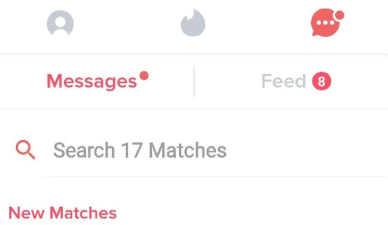
Whenever there is a new update on Tinder, such as when you have a new match, someone sent you a message, etc. you will see the red dot indicating that there is a something new worth checking out.
Tinder Dice Icon
There appears to be a new feature on Tinder that comes with a dice icon next to the messages.
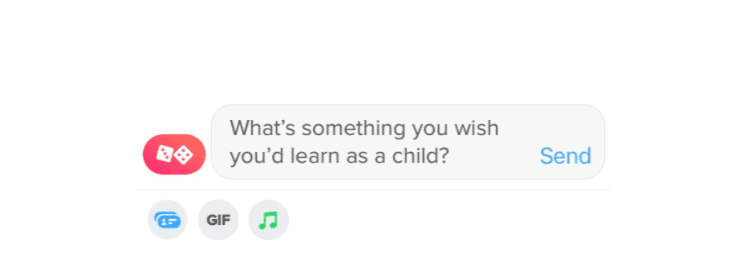
Next to the dice icon, you can see a randomly generated opening message that you can send you right away if you like it.
Tinder Black heart
If you used a specific feature on Tinder Diamond subscription, you might bump into the following black heart icon if someone likes you back.

Tinder Green Dot Symbol
The Tinder Green Dot is the symbol you can see when someone has been recently active in the app, that usually means they have been active in the last 24 hours.
Official Tinder Logo
The official Tinder logo has also gone through some changes over the years. Until 2017 the logo also has the full Tinder text in it:

In 2017 they changed it to a more minimalistic style, got rid of the text and started to use only the flame icon as their official logo. The logo resembles a flame or a red heart also, which is referring to love, attraction, hotness of using Tinder.

If you are interested in some analysis about Tinder logo, you can check out this video as well:
Are there any Tinder Symbols or Icons we missed out and you have no idea what it means? Let us know in the comments below and we will help you out.
How to Use Bumble
Bumble is the women-centered dating and networking app that appeared as a direct competitor to Tinder. Instead of just facilitating quick hookups, this app aims to help you find friends, partners, and network with local professionals, all from the same place.
The instructions in this article were verified to work with Bumble on an Android device.
A Quick Review: What Is Bumble?
Not all apps built to connect people do so while thinking about the actual people involved. Bumble, was built in part, to empower women and give them a better chance of deeper connections unlike competitors like Tinder.
Bumble is broken out into three separate sections: Bumble Date, Bumble BFF, and Bumble Bizz. Each one has its own specific purposes and works a bit differently. Bumble Date is for the people looking for a date night, or a new relationship.
You can find new friends in the area with Bumble BFF, and then Bumble Bizz is built for professionals to network in their industry. Each different method of using Bumble requires you to rebuild your profile. This means choosing photos to show off, writing a short bio, and talking about what you are looking for.
What Makes Bumble Different?
Rather than a one size fits all kind of networking, Bumble is built to give you agency whether you're dating or networking. You can also connect both Instagram and Spotify to your Bumble profile to give potential matches a better look at you before they swipe away.
Matching is where Bumble stands out from other matching social apps. In Bumble Date, all of the agency is handed over to the woman. Not only do both users need to match and swipe their interest, but then the woman will need to make the first move and send out a message. It's a way to make women feel just a little bit safer from abuse or harassment that can often show up in apps of these kinds.
Now that isn't to say that you aren't going to run into people that you don't want to deal with. If that happens you have two basic options. You can unmatch with someone, or entirely block them. In either case, this can be done in just a few taps so you can get on with things and not dwell.
How to Block or Unmatch Someone on Bumble
Open the message center with the person you want to block.
Tap the three vertical dots in the upper right corner of the screen.
Tap Unmatch or Block & Report.
Matching on Bumble
To match with someone all you need to do is swipe left or right. When you open the app you'll see your possible matches. You'll see the other person's profile, photos they've linked, and other information. If you scroll to the bottom of the page you'll also see a place where you can tap on either an x or a checkmark where you can match with someone.
You'll also see a star icon at the bottom of the profile, which is the icon for bumble's in-app currency bumble coins and Super Swipes. Using these coins is a way to confidently show another user you're really interested in them, instead of the usual back and forth that comes with meeting people through an app.
If you swipe to match with someone, and they've already swiped right on you, a screen will pop up showing you the match. This is also an easy time to toss out a hello message to introduce yourself.
After Matching
Once you've matched with someone, and they've matched with you, this person will show up in your match queue. This section of the app is found by hitting the message icon in the upper right corner of the screen.
Your Match Queue is a horizontal row that includes a green circle with people who are interested but you didn't swipe match with, and a row of everyone you did match with.
Under that, you'll see conversations. By tapping on the icon of a person you match with, a chat bubble opens up and gives you the chance to chat. If the two of you haven't chatted within the first 24 hours, the match expires and you'll have to match again in order to get to know each other.
The chat function inside of Bumble is also pretty solid so far as these things go. You can text, send gifs or even throw photos in there as you get to know this new person. You also have options for audio and video calling, as well as a voice message button. These features make it easy to keep things to the app until you're sure that you want to move off the app.
Switching Methods Of Using Bumble
Each different way of using Bumble comes with its own crowd of people for you to connect with. However, you can't see possible matches for Bumble Bizz while using Bumble BFF or vice versa.
Switching methods is super easy to do and lets you move back and forth with ease. Just remember to set up the profile for each method so that you can look forward to as many matches as possible, and you'll be good to go.
Open Bumble.
Tap the three line menu button at the top left.
Pick between date, bff, and bizz.
Stand Out Among the Crowd
With Bumble, the more information (and the more of your personality) that shines through on the screen the more matches you can expect. To that end, we've put together a few tips for optimal matching!
- Show off in photos: You can upload 6 profile photos for each method. Show off your personality with photos of pets, friends, family, and hobbies!
- Rock your Profile: You can choose to disclose whether you drink, smoke, have children and more through quick questions. While none of these answers are mandatory, by answering them you can ensure that you get higher quality matches. Likewise, you have room to write out what you're looking for, so be sure to talk yourself up. Let what's awesome about you shine through!
- Chat it up: After making matches be sure to send a message! Whether it's a quick gif or a sweet hello, the easiest way to meet people is by talking to them. Likewise, if you don't strike up a conversation within the first 24 hours that match will expire, so be bold and make the first move!
Thanks for letting us know!
App Alert: What Parents Need to Know about Popular New App ‘Yellow’

Go pick up your child’s phone. Is there an app icon that is a solid, yellow square? While that little yellow square may look harmless, the app is growing in popularity among teens and already causing concern.
Yellow is the new app that’s being called the ‘Tinder for teens,’ because it’s designed much like the popular Tinder dating app for adults. Like Tinder, Yellow has left-right swipe to browse profiles, photo sharing, and private chat capabilities.
A closer look at this app and we’re in agreement with authorities calling Yellow a potential grooming tool for online predators. Here’s what parents need to know:
Risks:

- Although Yellow requires users to be 17 anyone can open an account and begin browsing (swiping) through user profiles instantly.
- Contradicting their app’s age requirement, Yellow gives you the option of posting your age, which is numbers between 13-17.
- Many of users posted first and last names and their locations —always a bad sign of an app’s level of attention to safety.
- The app immediately allows users to connect with friends on three accounts: Snapchat, Instagram, and Musical.ly, which is far too much immediate access.
- Yellow allows a user to report a suspicious account but does not have a blocking feature, which opens the door to malicious activity including cyber bullying.
- Yellow makes it tough to follow a basic family technology rule, which is never send a photo to a stranger. Your kids connect with real-life friends through other networks. So why connect with strangers? Yellow is photo-based and exists off discovering new people nearby. Those strangers could easily be adults posing as kids.
- Sexting could quickly become an issue with Yellow. In a very short time, we noticed many male teens posting shirtless photos and females posting sexy photos.
 Dangerous apps abound, and kids seem to love them. Some apps are anonymous, some automatically delete posts after 24 hours, and others, allow live video feeds between users. That list includes: kik, Yik Yak, Ask.fm, Whisper, YouNow, ooVoo, Secret, Omegle, among others (see a few app icons, right).
Talking Points for Families
- Anytime an online connection turns into a face-to-face encounter; you are at risk — especially if you are a minor.
- Kids can be overconfident in their ability to discern the truth about other people’s stories and motives. Catfish, predators and cyber bullies don’t show their true colors immediately. Often, there’s grooming and lying. So, connecting with another teen in another city you don’t know isn’t wise.
- Using mobile apps with GPS can easily be tracked, which compromises a user’s location.
- Some users of Yellow and similar dating or “connection” use the app solely to “hook up” briefly. This culture could emotionally and physically damage a minor.
- Yellow, along with other dating apps lack authenticity, adequate privacy, and safety standards.
- Online communication can create a false sense of intimacy and closeness. Researchers call this the hyperpersonal effect of online communication versus face-to-face relationships. This effect is a risk to an emotionally immature tween or teen.
- Law enforcement has connected some apps used by minors (including Yellow) directly to predators.
- Remind kids: If you do get a suspicious, mean, or obscene message on any social network, to report the account and to let an adult know.
- If you haven’t already installed filtering software on both your child’s phone and PC, now might be a good time. Many programs offer site blocking as well as reports that tell you what social networks your child spends the most time on.

Most people want to meet new people and find that special connection, which someone else who “gets it.” Your child is no different, and his or her journey into relationships is just beginning. As parents, we can stay alert, coach from the sidelines without judging, and remind them of the risks they may ignore as hormones and excitement close in.
While it’s tempting to go on your child’s phone and delete every potentially dangerous app, there’s a higher goal, and that is to become an approachable parent. Rather than throw down the gauntlet, take the time to talk with your kids about their social lives, friendships, and romantic relationships. Try to support without judging; coach without condemning. You’ll find that once communication and trust are solid, setting boundaries on app use will be your child’s expectation and not the start of the next world war.

Toni Birdsong is a Family Safety Evangelist to McAfee. You can find her on Twitter @McAfee_Family. (Disclosures).
Explained: What is Yubo (formerly Yellow)?
Explained: What is Yubo (formerly Yellow)?
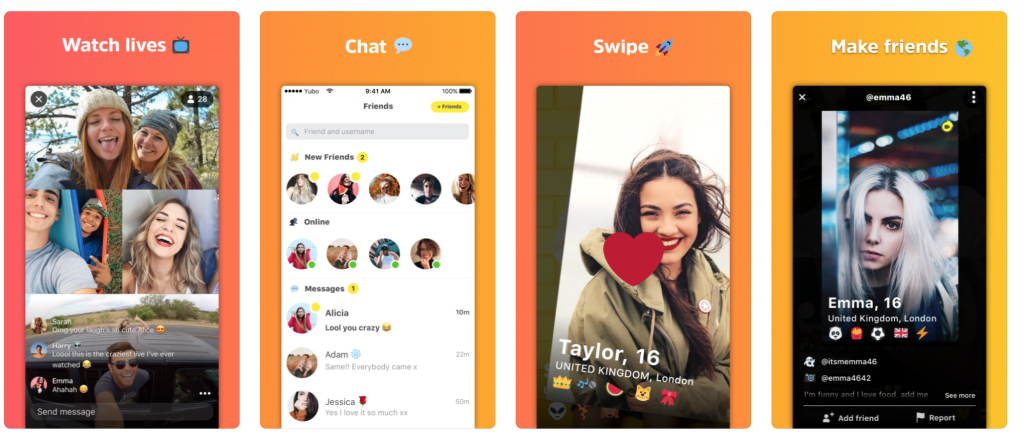 Yubo (formerly know as Yellow) app is a social networking site where users can make new online friends. Users create an account and swipe left if they want to be friends with someone or right if they would like to pass that profile. According to media reports the app Yellow came under fire as it was linked to a number of teen sexting incidents in Ireland. It has since rebranded as Yubo. In this article, we explain how Yubo works and address some concerns parents may have around the app.
How Does it Work?
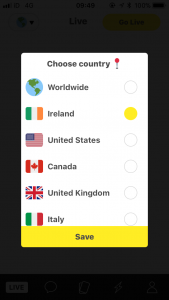
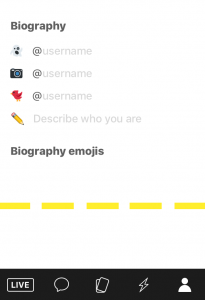
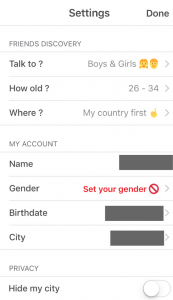
The mobile phone app is free to download. To create a Yubo profile, users must give their first name, gender, and date of birth. Users can then choose who they would like to connect with; boys, girls or both. Finally, users can then upload a profile picture and up to 5 other photos. The app encourages users to describe themselves using emoji’s, a feature that may appeal to younger users.
The app can be used in your own country or you can choose to make new friends from around the world. You have the option of hiding your city while using the app. Yubo uses location technology to find other users nearby, meaning that if you choose to use the location features, the app will show you other users who are in close proximity to you. This brings up obvious risks for young people sharing their location online.
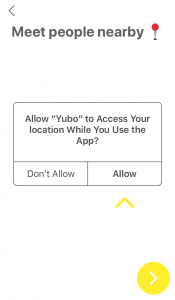
Users can swipe right if they see someone they want to connect with or left if they are not interested. If both users swipe right they are matched and can message each other within the Yubo App.
What is concerning about the Yubo app is that it makes it easy for young people to connect with people they don’t know and its design is similar in nature to adult dating apps like Tinder and Bumble.
Yubo also now has a Live feature, meaning that users can create a live video with up to four ‘friends’. There are dangers with this type of activity.
What Parents Need to Know?
Age Restrictions
UPDATE: Under the new E.U General Data Protection Regulation (GDPR), Ireland has now set the Digital Age of Consent to 16 years old. This means young people under the age of 16 in Ireland are not allowed to access this platform.
Users aged 16- 17 and under are only allowed to connect with other users aged between 16-17 years old. However, it is very easy to access the app using an incorrect date of birth. The lack of a robust age-verification tool poses a risk for young users and opportunities for predators.
(NOTE: There is also a version available for adults aged 18+.)
Inappropriate Content
Warnings about inappropriate content can be found on the app store when downloading the app and include the following flags:
• Infrequent/Mild Sexual Content and Nudity
• Frequent/Intense Mature/Suggestive Themes
• Infrequent/Mild Profanity or Crude Humour
• Infrequent/Mild Alcohol, Tobacco, or Drug Use or References
While Instagram and Snapchat are no longer integrated into the site, while conducting our own research, we found that many users upload a picture of the snapchat account details.
 Reporting Tools
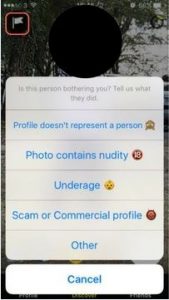
Users can report other profiles, this can be done simply by clicking on the flag icon in the top left corner of the profile you wish to report. The app will then ask users to select a reason for the report from a list of options.
Privacy and Terms of Service
At the time of writing this article there was no clear information available on the Yubo website or in the within the app about terms of service and privacy which is concerning. This is not unusual, as new apps scramble to get out on the market, app creators tend to deal with safety issues as they arise rather than in the design phase. We always recommend reading terms of service and privacy information before downloading any app.
Advice for Parents
It is important for parents to be aware of what apps and social networks their child is using. We would recommend exercising extreme caution with the Yubo app, parents need to consider whether the app is age appropriate for their child.
Safety Features Built into Yubo
Yubo has attempted to make the site safer, using a number of safeguarding features.
– Every user must provide a real mobile phone number at sign-up, which is verified and kept on file
– Users can no longer link to their Instagram or Snapchat account from Yubo
– Location is turned off by default and users also have the option to hide their city
– Before using the app, every user receives a link to community guidelines
– Image-matching technology to detect fake profile photos
– Yubo investigate potentially underage profiles and suspend accounts if someone is lying about their age
– The flag icon in the app and a dedicated reporting form for parents makes it easy to report abuse and other concerns. Respond time aims to be within 24 hours
– Yubo provide safety advice pop-ups and real-time notifications if someone breaks community guidelines so that they understand what they did wrong
– If a user contravenes the terms of service, Yubo can block their mobile phone’s IMEI number so they can’t simply open a new account from the same device
– Yubo is currently developing technology to identify teens posing semi-clad in their photos which is not permitted on Yubo
Educating and Empowering
Yubo has created two guides to staying safer on Yubo – one for Parents, Carers, and Educators (http://parents-guide.yubo.live/) and one for Teens (http://teens.yubo.live/). The guides provide information about the safety tools available in the app as well as advice about bullying, inappropriate contact, self-esteem and other issues. Yubo also produced guidelines for law enforcement.
What Is the Diamond Icon in Tinder?

Have you seen a gold-colored diamond icon on a profile picture while you were browsing through Tinder? Have you seen the diamond icon at the top of your Tinder browsing screen? If you have, you’ve probably wondered what the heck you were looking at. The answer is that these icons are part of Tinder’s “Top Picks” program. In this article, I’ll explain how Top Picks works.
The Top Picks feature rolled out in the summer of 2018 and for quite a while was completely limited to Tinder Gold subscribers. The feature first ran as an experiment to see how it went down with users and was rolled out to Tinder users in the UK, Germany, Brazil, France, Canada, Turkey, Mexico, Sweden, Russia, and the Netherlands before being rolled out to the US and across the world.

Tinder Top Picks
So what is Tinder Top Picks and what can it do for you? It’s another premium service offered by the app. The way it works is fairly simple. Every day, the whirring supercomputers at Tinder Global HQ go through all the potential matches in your area and use an algorithm to pick out between 1 and 10 people that the algorithm thinks match your profile particularly well. If you tap on the diamond icon at the top of your browsing screen, the Tinder app will display your matches of the day in a 2×2 grid of smaller profile cards. You can then look at the profiles (at full size) and do the usual left-right-up swap decision dance. If you see the diamond on someone’s profile while doing normal browsing, that just indicates that this person is one of your Picks for the day.
It used to be that only Tinder Gold subscribers saw the diamonds; it was part of the elite-only experience and regular common folk did not have access to the Top Picks feature. Now, however, the powers-that-be at Tinder has decided to throw the little people a scrap.
Starting in May of 2019 or so, regular Tinder users got the diamond icon at the top of their screen and can look at their Top Picks just like the nobility. We can look at the profiles as much as we want. However, we only get one swipe per day – you can pick one of your Top Picks and swipe on them, but after that, it’s looking only… though of course, Tinder will be happy to sell you access to Tinder Gold so that you can swipe on all your Top Picks each day.

How Does The Algorithm Work?
So how does the algorithm work? Are powerful supercomputers running facial analysis programs on our profile pics and doing deep analysis to recreate our genetic code, then matching us with individuals with whom we would have super cute children? No, although that would be pretty cool. The algorithm doesn’t have a whole lot to go on, specifically, your bio.
Essentially Top Picks scans your bio and looks for certain keywords. Those keywords are then used to assign a label to you, like “Creative”. The match program then finds other users who have the same label(s) in your area and age range.
According to the Tinder rumor mill, the algorithm also analyzes your past swipe pattern and uses this information to figure out what kind of people you are most interested in. For example, if your age range is set to 30-45, but you always swipe left on people older than 40, the algorithm will screen out people over 40 from your Top Picks. It is unknown what exact things the algorithm is analyzing.
The difficulty with Top Picks seems to be that our bios don’t give a lot of information, and much of it is unreliable. If I post in my bio about how I hate mountain biking, the algorithm is just going to see “mountain bike” and put me in the “Biker” label. I have looked at my Top Picks for several days, and I don’t see any particular pattern indicating that these people would be a good match for me. The main usefulness of Top Picks seems to be cutting down on your swiping time a little bit, or who just want to swipe right on a few people each day and let the rest sit in the match queue.
Using Tinder Top Picks
Everybody gets to look at their Top Picks, and even to swipe on one Pick per day, but only Tinder Gold subscribers get to swipe on everybody. Here’s how to use the Top Picks feature:
- Open Tinder and select the diamond at the top of the Discovery screen.
- Check out the selections and swipe left or right as you see fit.
- Wait for Top Picks to refresh daily (you can also purchase additional picks if you’re a Gold subscriber).

If you see the diamond icon in a Tinder profile, it means that person is in your Top Picks. That’s all.

One last thing you need to know about Tinder Picks is that they are time-limited. They refresh every 24 hours, so if you find someone you like, swipe on them right away. Depending on how wide your pool is, they will likely appear again in the usual rotation but if you live somewhere with lots of users, that may be a while. This time limit encourages users to be proactive and engaged with Tinder. The more we use the app, the happier Tinder is.
Other Tinder Icons Explained
Just like Snapchat and other social media or dating sites, one of the easiest ways to convey simple information is by using symbols. Whether it’s emojis or icons, app developers took the idea and ran with it on several platforms.
Tinder is no different. There are several icons with different meanings so let’s review the others you may have seen while swiping.
- The Purple Lightning Bolt – You get one of these free each month and it boosts your presence in your area.
- The Green Heart – This means you’ve liked a profile.
- The Yellow Heart – Another user with Tinder Gold has liked your profile.
- The Blue Star Icon – This means you “Super” like someone. It serves to gain their attention.
- A Red ‘X’ – You do not like that profile, so you’ve chose to dislike it resulting in a red ‘X.’
Have you had good or bad experiences using Tinder Picks? Share them with us below in the comments!
Have you seen a gold-colored diamond icon on a profile picture while you were browsing through Tinder? Have you seen the diamond icon at the top of your Tinder browsing screen? If you have, you’ve probably wondered what the heck you were looking at. The answer is that these icons are part of Tinder’s “Top Picks” program. In this article, I’ll explain how Top Picks works.
The Top Picks feature rolled out in the summer of 2018 and for quite a while was completely limited to Tinder Gold subscribers. The feature first ran as an experiment to see how it went down with users and was rolled out to Tinder users in the UK, Germany, Brazil, France, Canada, Turkey, Mexico, Sweden, Russia, and the Netherlands before being rolled out to the US and across the world.
Tinder Top Picks
So what is Tinder Top Picks and what can it do for you? It’s another premium service offered by the app. The way it works is fairly simple. Every day, the whirring supercomputers at Tinder Global HQ go through all the potential matches in your area and use an algorithm to pick out between 1 and 10 people that the algorithm thinks match your profile particularly well. If you tap on the diamond icon at the top of your browsing screen, the Tinder app will display your matches of the day in a 2×2 grid of smaller profile cards. You can then look at the profiles (at full size) and do the usual left-right-up swap decision dance. If you see the diamond on someone’s profile while doing normal browsing, that just indicates that this person is one of your Picks for the day.
It used to be that only Tinder Gold subscribers saw the diamonds; it was part of the elite-only experience and regular common folk did not have access to the Top Picks feature. Now, however, the powers-that-be at Tinder has decided to throw the little people a scrap.
Starting in May of 2019 or so, regular Tinder users got the diamond icon at the top of their screen and can look at their Top Picks just like the nobility. We can look at the profiles as much as we want. However, we only get one swipe per day – you can pick one of your Top Picks and swipe on them, but after that, it’s looking only… though of course, Tinder will be happy to sell you access to Tinder Gold so that you can swipe on all your Top Picks each day.
How Does The Algorithm Work?
So how does the algorithm work? Are powerful supercomputers running facial analysis programs on our profile pics and doing deep analysis to recreate our genetic code, then matching us with individuals with whom we would have super cute children? No, although that would be pretty cool. The algorithm doesn’t have a whole lot to go on, specifically, your bio.
Essentially Top Picks scans your bio and looks for certain keywords. Those keywords are then used to assign a label to you, like “Creative”. The match program then finds other users who have the same label(s) in your area and age range.
According to the Tinder rumor mill, the algorithm also analyzes your past swipe pattern and uses this information to figure out what kind of people you are most interested in. For example, if your age range is set to 30-45, but you always swipe left on people older than 40, the algorithm will screen out people over 40 from your Top Picks. It is unknown what exact things the algorithm is analyzing.
The difficulty with Top Picks seems to be that our bios don’t give a lot of information, and much of it is unreliable. If I post in my bio about how I hate mountain biking, the algorithm is just going to see “mountain bike” and put me in the “Biker” label. I have looked at my Top Picks for several days, and I don’t see any particular pattern indicating that these people would be a good match for me. The main usefulness of Top Picks seems to be cutting down on your swiping time a little bit, or who just want to swipe right on a few people each day and let the rest sit in the match queue.
Using Tinder Top Picks
Everybody gets to look at their Top Picks, and even to swipe on one Pick per day, but only Tinder Gold subscribers get to swipe on everybody. Here’s how to use the Top Picks feature:
- Open Tinder and select the diamond at the top of the Discovery screen.
- Check out the selections and swipe left or right as you see fit.
- Wait for Top Picks to refresh daily (you can also purchase additional picks if you’re a Gold subscriber).
If you see the diamond icon in a Tinder profile, it means that person is in your Top Picks. That’s all.
One last thing you need to know about Tinder Picks is that they are time-limited. They refresh every 24 hours, so if you find someone you like, swipe on them right away. Depending on how wide your pool is, they will likely appear again in the usual rotation but if you live somewhere with lots of users, that may be a while. This time limit encourages users to be proactive and engaged with Tinder. The more we use the app, the happier Tinder is.
Other Tinder Icons Explained
Just like Snapchat and other social media or dating sites, one of the easiest ways to convey simple information is by using symbols. Whether it’s emojis or icons, app developers took the idea and ran with it on several platforms.
Tinder is no different. There are several icons with different meanings so let’s review the others you may have seen while swiping.
- The Purple Lightning Bolt – You get one of these free each month and it boosts your presence in your area.
- The Green Heart – This means you’ve liked a profile.
- The Yellow Heart – Another user with Tinder Gold has liked your profile.
- The Blue Star Icon – This means you “Super” like someone. It serves to gain their attention.
- A Red ‘X’ – You do not like that profile, so you’ve chose to dislike it resulting in a red ‘X.’
Have you had good or bad experiences using Tinder Picks? Share them with us below in the comments!
How to Delete Captions on Your Television
Read Next
Explained: What is Yubo (formerly Yellow)?
Explained: What is Yubo (formerly Yellow)?
Yubo (formerly know as Yellow) app is a social networking site where users can make new online friends. Users create an account and dating app with yellow icon left if they want to be friends with someone or right if they would like to pass that profile. According to media reports the app Yellow came under fire as it was linked to a number of teen sexting incidents in Ireland. It has since rebranded as Yubo. In this article, we explain how Yubo works and address some concerns parents may have around the app.
How Does it Work?
The mobile phone app is free to download. To create a Yubo profile, users must give their first name, gender, and date of birth, dating app with yellow icon. Users can then choose who they would like to connect with; boys, girls or both. Finally, users can then upload a profile picture and up to 5 other photos. The app encourages users to describe themselves using emoji’s, a feature that may appeal to younger users.
The app can be used in your own country or you can choose to make new friends from around the world. You have the option of hiding your city while using the app. Yubo uses location technology to find other users nearby, meaning that if you choose to use the location features, the app will show you other users who one night stand dating apps in close proximity to you, dating app with yellow icon. This brings up obvious risks for young people sharing their location online.
Users can swipe right if they see someone they want to connect with or left if they are not interested. If both users swipe right they are matched and can message each other within the Yubo App.
What is concerning about the Yubo app is that it makes it easy for young people to connect with people they don’t know and its design is similar in nature to adult dating apps like Tinder and Bumble.
Yubo also now has a Live feature, meaning that users can create a live video with up dating app with yellow icon four ‘friends’. There are dangers with this type of activity.
What Parents Need to Know?
Age Restrictions
UPDATE: Under the new E.U General Data Protection Regulation (GDPR), Ireland has now set the Digital Age of Consent to 16 years old. This means young people under the age of 16 in Ireland are not allowed to access this platform.
Users aged 16- 17 and under are only allowed to connect with other users aged between 16-17 years old. However, it is very easy to access the app using an incorrect date of birth. The lack of a robust age-verification tool poses a risk for young users and opportunities for predators.
(NOTE: There is also a version available for adults aged 18+.)
Inappropriate Content
Warnings about inappropriate content can be found on the app store when downloading the app and include the following flags:
• Infrequent/Mild Sexual Content and Nudity
• Frequent/Intense Mature/Suggestive Themes
• Infrequent/Mild Profanity or Crude Humour
• Infrequent/Mild Alcohol, Tobacco, or Drug Use or References
While Instagram and Snapchat are no longer integrated into the site, while conducting our own research, we found that many users upload a picture of the snapchat account details.
Reporting Tools
Users can report other profiles, this can be done simply by clicking on the flag icon in the top left corner of the profile you wish to report. The app will then ask users to select a reason for the report from a list of options.
Privacy and Terms of Service
At the time of writing this article there was no clear information available on the Yubo website or in the within the app about terms of service and privacy which is concerning. This is not unusual, as new apps scramble to get out on the market, app creators tend to deal with safety issues as they arise rather than in the design phase. We always recommend reading terms of service and privacy information before downloading any app.
Advice for Parents
It is important for parents to be aware of what apps and social networks their child is using. We would recommend exercising extreme caution with the Yubo app, parents need to consider whether the app is age appropriate for their child.
Safety Features Built into Yubo
Yubo has attempted to make the site safer, dating app with yellow icon, using a number of safeguarding features.
– Every user must provide a real mobile phone number at sign-up, which is verified and kept on file
– Users can no longer link to their Instagram or Snapchat account from Yubo
– Location is turned off by default and users also have the option to hide their city
– Before using the app, every user receives a link to community guidelines
– Image-matching technology to detect fake profile photos
– Yubo investigate potentially underage profiles and suspend accounts if someone is lying about their age
– The flag icon in the app and a dedicated dating app with yellow icon form for parents makes it easy to report abuse and other concerns. Respond time aims to be within 24 hours
– Yubo provide safety advice pop-ups and real-time notifications if someone breaks community guidelines so that they understand what they did wrong
– If a user contravenes the terms of service, Yubo can block their mobile phone’s IMEI number so they can’t simply open a new account from the same device
– Yubo is currently developing technology to identify teens posing semi-clad in their photos which is not permitted on Yubo
Educating and Empowering
Yubo has created two guides to staying safer on Yubo – one for Parents, Carers, and Educators (http://parents-guide.yubo.live/) and one for Teens (http://teens.yubo.live/). The guides provide information about the safety tools available in the app as well as advice about bullying, inappropriate contact, self-esteem and other issues. Yubo also produced guidelines for law enforcement.
App Alert: What Parents Need to Know about Popular New App ‘Yellow’
Go pick up your child’s phone. Is there an app icon that is a solid, yellow square? While that little yellow square may look harmless, the app is growing in popularity among teens and already causing concern.
Yellow is the new app that’s being called the ‘Tinder for teens,’ because it’s designed much like the popular Tinder dating app for adults. Like Tinder, Yellow has left-right swipe to browse profiles, photo sharing, and private chat capabilities.
A closer look at this app dating app with yellow icon we’re in agreement with authorities calling Yellow a potential grooming tool for online predators. Here’s what parents need to know:
Risks:
- Although Yellow requires users to be 17 anyone can open an account and begin browsing (swiping) through user profiles instantly.
- Contradicting their app’s age requirement, Yellow gives you the option of posting your age, which is numbers between 13-17.
- Many of users posted first and last names and their locations —always a bad sign of an app’s level of attention to safety.
- The app immediately allows users to connect with friends on three accounts: Snapchat, Instagram, and Musical.ly, which is far too much immediate access.
- Yellow allows a user dating app with yellow icon report a suspicious account but does not have a blocking feature, which opens the door to malicious activity including cyber bullying.
- Yellow makes it tough to follow a basic family technology rule, which is never send a photo to a stranger. Your kids connect with real-life friends through other networks. So why connect with strangers? Yellow is photo-based and exists off discovering new people nearby. Those strangers could easily be adults posing as kids.
- Sexting could quickly become an issue with Yellow. In a very short time, we noticed many male teens posting shirtless photos and females posting sexy photos.
Dangerous apps abound, and kids seem to love them. Some apps are anonymous, some automatically delete posts after 24 hours, and others, allow live video feeds between users. That list includes: kik, dating app with yellow icon, Yik Yak, Ask.fm, Whisper, YouNow, ooVoo, Secret, Omegle, among others (see a few app icons, right).
Talking Points for Families
- Anytime an online connection turns into a face-to-face encounter; you are at risk — especially if you are a minor.
- Kids can be overconfident in their ability to discern the truth about other people’s stories and motives. Catfish, predators and cyber bullies don’t show their true colors immediately. Often, there’s grooming and lying. So, dating app with yellow icon, connecting with another teen in another city you don’t know isn’t wise.
- Using mobile apps with GPS can easily be tracked, which compromises a user’s location.
- Some users of Yellow and similar dating or “connection” use the app solely to “hook up” briefly. This culture could emotionally and physically damage a minor.
- Yellow, along with other dating apps lack authenticity, adequate privacy, and safety standards.
- Online communication can create a false sense of intimacy and closeness. Researchers call this the hyperpersonal effect of online communication versus face-to-face relationships. This effect is a risk to an emotionally immature tween or teen.
- Law enforcement has connected some apps used by minors (including Yellow) directly to predators.
- Remind kids: If you do get a suspicious, mean, or obscene message on any social network, to report the account and to let an adult know.
- If you haven’t already installed filtering software on both your child’s phone and PC, now might be a good time. Many programs offer site blocking as well as reports that tell you what social networks your child spends the most time on.
Most people want to meet new people and find that special connection, which someone else who “gets it.” Your child is no different, and his or her journey into relationships is just beginning. As parents, we can stay alert, coach from the sidelines without judging, and remind them of the risks they may ignore as hormones and excitement close in.
While it’s tempting to go on your child’s phone and delete every potentially dangerous app, there’s a higher goal, and that is to become an approachable parent. Rather than throw down the gauntlet, take the time to talk with your kids about their social lives, friendships, and romantic relationships. Try to support without judging; coach without condemning. You’ll find that once communication and trust are solid, setting boundaries on app use will be your child’s expectation and not the start of the next world war.
Toni Birdsong is a Family Safety Evangelist to McAfee. You can find her on Twitter @McAfee_Family. (Disclosures).
-
-
-